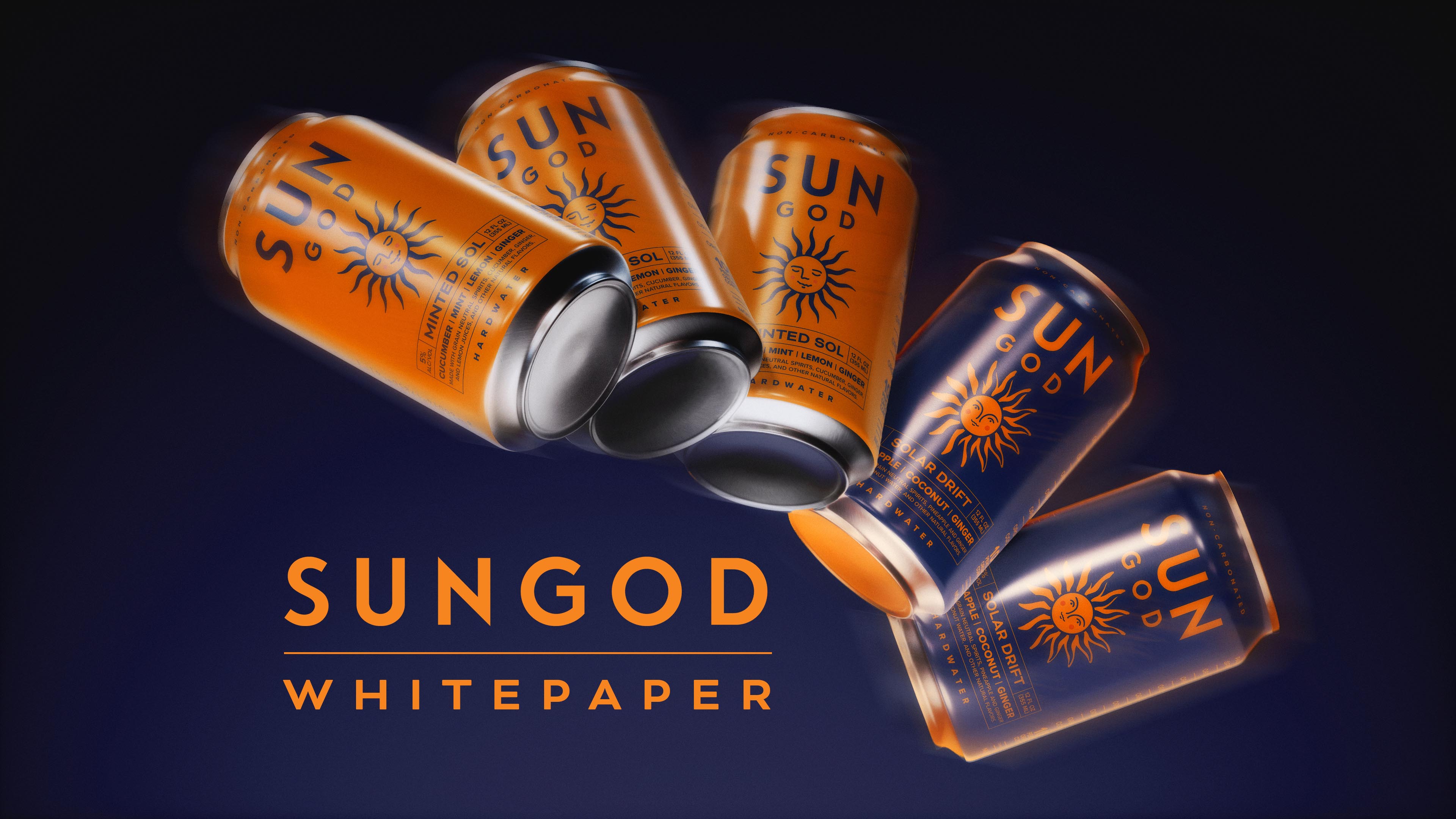

The SUNGOD Whitepaper
A First-Principles Approach to Building a Cleaner Alcohol Experience
1. Overview
Alcohol hasn’t changed in decades. Consumer expectations have.
People want to enjoy a drink without sacrificing the next day’s output. Yet the market keeps giving them the same formula: cheap bases, artificial flavors, bubbles masking mediocrity, and undisclosed additives.
SUNGOD started from a simple question:
If you rebuilt an alcoholic beverage from scratch—using first principles and engineering discipline—what would it look like?
This whitepaper documents the reasoning, constraints, and design decisions that shaped that answer.
2. The Initial Problem Set
Across active, high-output lifestyles—boats, mountains, long days in heat—existing options all fail for the same reasons:
Beer is heavy, bloating, and repetitive
Seltzers taste artificial, cause gastric distress, and hide behind carbonation
RTDs are sugary, acidic, and overwhelming
“Premium” brands are repackaged versions of the above—same liquid, new label
None of them care about next-day cognitive or physical performance
People aren’t looking for celebrity endorsements. They want a drink that feels good during and after consumption.
And nothing on the shelf solved that - yet.
3. Foundational Insight: Hangovers Come From Congeners, Not Sugar
A key shift happened when we found research summarized by Dr. Andrew Huberman:
The severity of next-day symptoms tracks with congener load—not sugar content.
In controlled testing:
Brandy ranked highest in expected hangover severity
Dark spirits followed
Clearer spirits performed better
The lowest severity came from pure ethanol diluted in juice
The relevant discovery:
Congeners—impurities left over from fermentation and distillation—drive much of the negative next-day effect.
That single word (congeners) reframed the entire design.
4. Engineering Approach: Strip the System Down
A core Tesla engineering principle applies here:
The best part is no part.
If congeners are avoidable impurities, then the optimal alcohol base is the cleanest possible form used responsibly:
High-purity organic neutral spirit (≈95%)
Free of the congener load found in vodka, rum, whiskey, tequila, etc.
Then diluted precisely back down to 5% ABV with high-quality water
The insight was simple but untouched by the mass market:
Start with the purest ethanol, then rebuild the drink around it—layer by layer—using intention instead of legacy conventions.
This reverses the standard process:
Typical brands start with flavored/distilled alcohol
They then mask impurities with additives, carbonation, stabilizers, and artificial flavors
We did the opposite.
5. Layer 1: Alcohol Base: Neutral Grain Spirit (What It Is and Why We Use It)
Most consumers have never heard the term neutral grain spirit (NGS), but it’s the foundation of many modern spirits.
A neutral grain spirit is ethanol distilled to very high purity (≈95%), stripped of most congeners and impurities. It is flavorless, colorless, and designed to function as a clean base ingredient.
We chose NGS for three reasons:
Lowest congener load. Fewer fermentation byproducts means fewer known contributors to next-day fatigue.
Consistency and control. Unlike vodka, which varies widely by producer, NGS delivers predictable purity.
Better use of space. Because it’s highly concentrated, we use less alcohol volume and reclaim room in the can for better water and real juice.
This reflects a core SUNGOD principle:
start with the cleanest possible alcohol molecule, then build only what adds value.
6. Layer 2: Water Quality
A lot of canned beverages use municipal or filtered tap water at their co-packing facility.
We rejected that from day one.
Water is the majority of the drink. If the water is low-grade, the drink is low-grade—no matter what else you do.
We adopted:
Mountain spring water
Naturally occurring mineral profile
Clean sensory characteristics
Validated by an independent water engineer
This became the hydrating backbone of SUNGOD.
7. Layer 3: Non-Carbonation
This wasn’t a trend-following choice. It came from first-principles questioning:
Does carbonation add value or subtract value?
Drawbacks:
Gastric distress
Bloating
Accelerated intoxication
Taste masking
Reduced drinkability over long sessions
Benefits:
Consumer familiarity
Fan favorite with certain consumers
Value analysis was simple: Carbonation subtracts more than it adds.
Removing it unlocked:
Smoother drinking
Less acidity
Reduced gastric load
More sessionable profiles
This decision became core to the product’s identity.
8. Layer 4: Real Organic Juice
Another first-principles question:
Do artificial flavors create a better experience or just a cheaper product?
Artificial flavors fail on four dimensions:
Flat aroma
One-note taste
No particulate body
No emotional memory
Real juice instantly solved these:
Sensory depth
Aroma release when the can opens
Natural color and texture
A grounded, recognizable flavor profile
The tradeoff: cost. We absorbed it. Because the experience demanded it.
Every juice is organic. The difference in taste, smell, and body is measurable.
9. Layer 5: Natural Flavor Architecture
Fresh juice gives body, but shelf stability requires additional flavor reinforcement.
We worked with a specialized flavor formulator/chemist—not a generic flavor house—to reverse-engineer real sensory dynamics:
Single-variable revisions
Aroma-to-taste alignment
Controlled linger time
Correction for earthy off-notes
Preserving the “first-night prototype” experience
We refused to move forward until the canned version matched the homemade originals.
10. System Summary: A New Beverage Architecture
Every decision flowed from one constraint:
Minimize impact, maximize experience.
So the final stack looks like this:
High-purity neutral organic spirit (lowest congener load)
Mountain spring water (hydration + mineral benefits)
No carbonation (comfort + drinkability)
Organic real juices (aroma, flavor, body)
Precise natural flavor tuning (stability + clarity)
Organic cane sugar (authenticity > artificial shortcuts)
Gluten-free, fully organic build (aligned with the target customer)
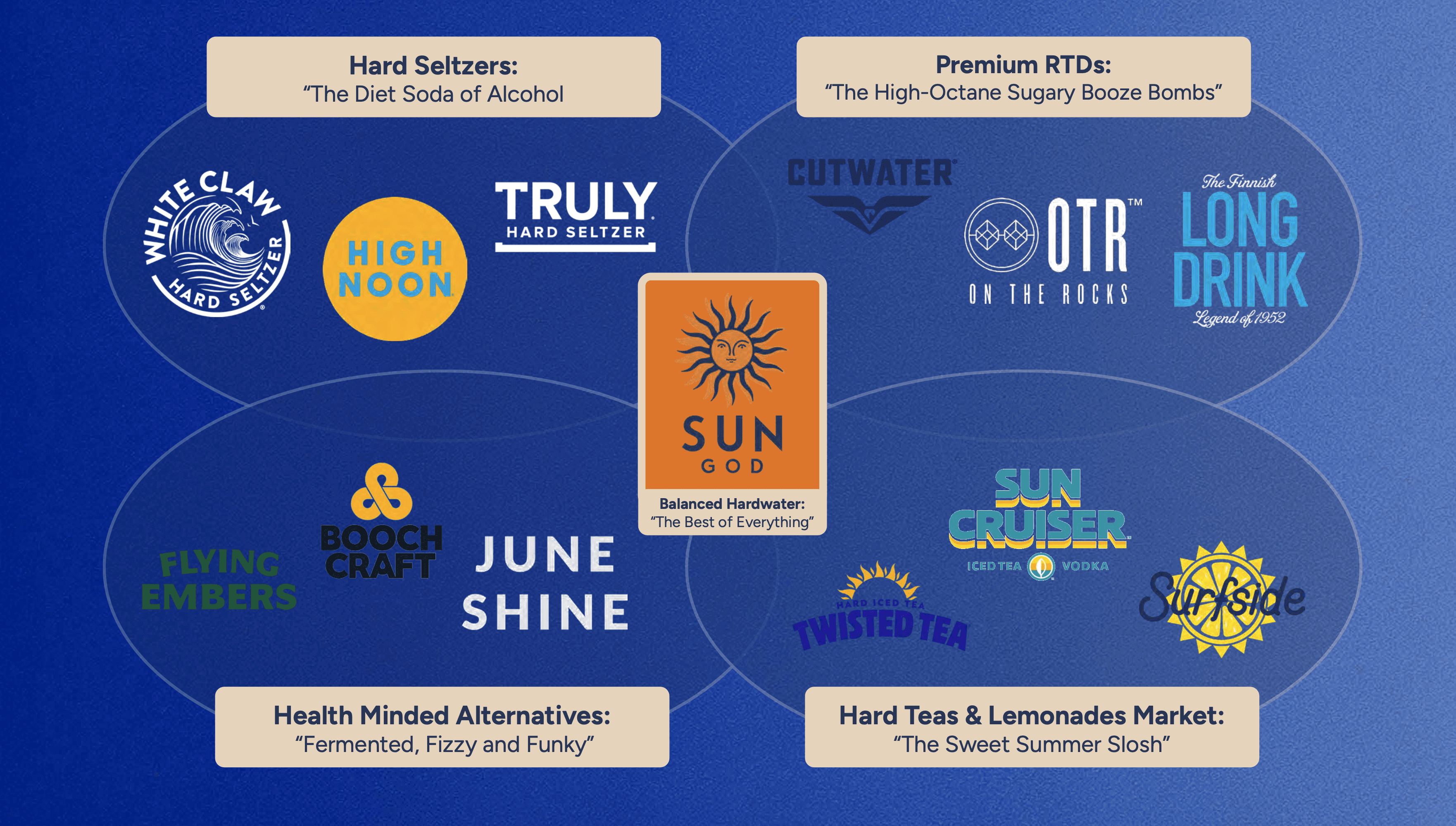
This is not a seltzer.
Not a cocktail.
Not an RTD.
Not a hard tea.
It is something new.
We call it Hardwater.
11. Why We Call It Hardwater
Hardwater is not a marketing term. It describes how the drink is built.
Unlike seltzers, which rely on carbonation, or cocktails, which rely on spirit-forward intensity, SUNGOD is designed around water first. Alcohol is integrated into high-quality water, not layered on top of it.
The name Hardwater communicates three things:
water-forward architecture
minimal, stripped-down formulation
clarity over complexity
This category didn’t exist before. Hardwater defines a new class of alcohol that prioritizes purity, hydration balance, and sessionability—without bubbles or excess.
12. Category Definition: Hardwater
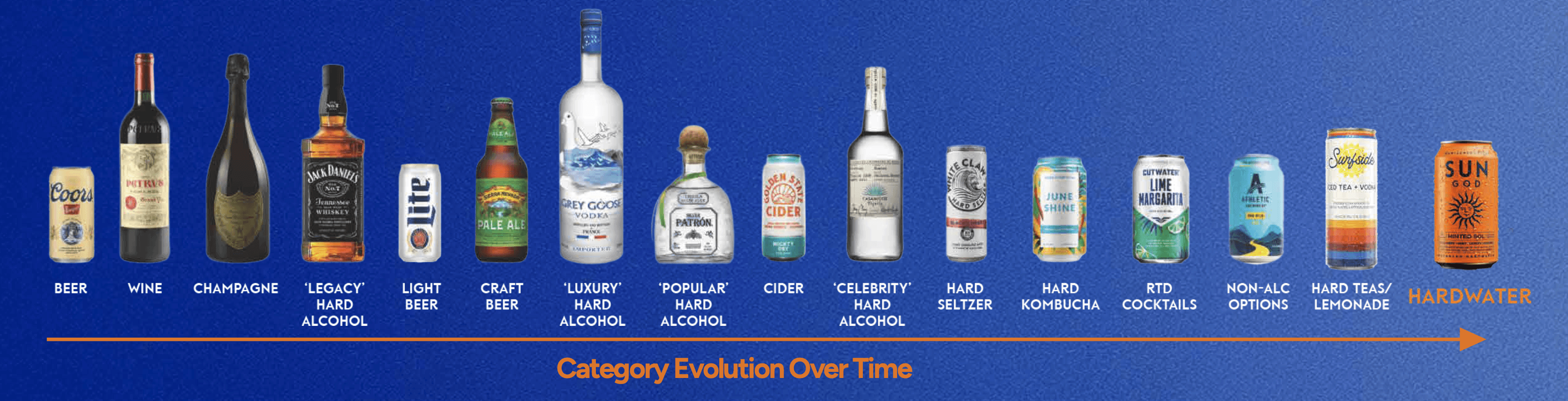
SUNGOD sits in a category that didn’t exist before:
Hardwater = ethanol engineered for purity + water engineered for hydration + real juice for body + zero carbonation.
Core properties:
Low congener load
Sessionable
Hydrating by design
Cocktail complexity without cocktail heaviness
Functional without making regulated health claims
This is the logical next step after seltzers, RTDs, non-alcoholic spirits, and better-for-you categories.
13. Flavor State-Change Model
Most beverage companies think in flavors.
We think in state changes—emotional and sensory transitions triggered by the profile.
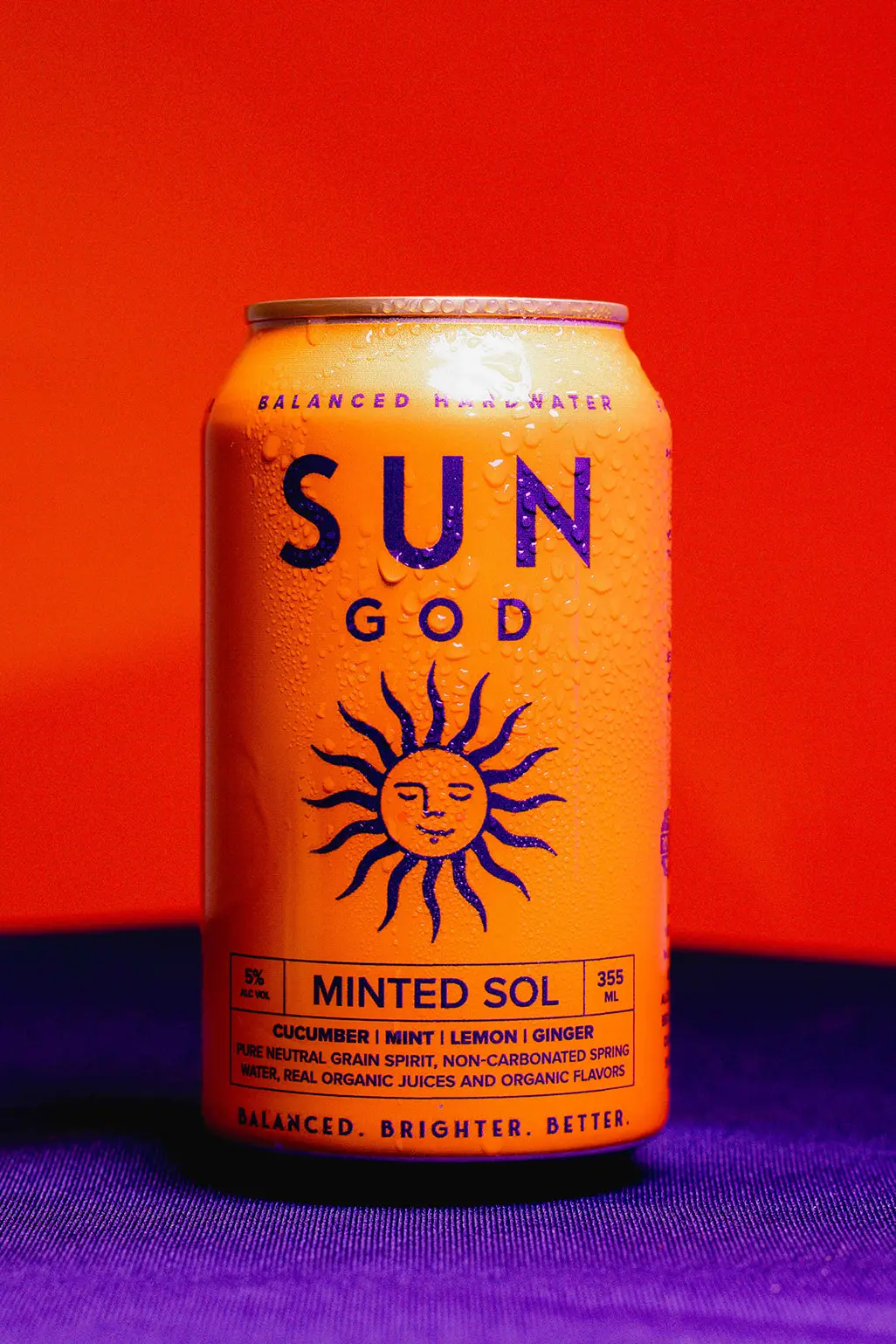
Flavor 1: Minted Sol
State: Hydrated clarity
Profile: cucumber, lemon, mint, ginger
Vibe: spa energy, reset, sun-on-skin freshness
User response: “I feel clean and awake.”
Why it works:
Cucumber + lemon signal hydration
Mint opens aromatics
Ginger gives a micro-snap without heaviness
Light, green, sessionable
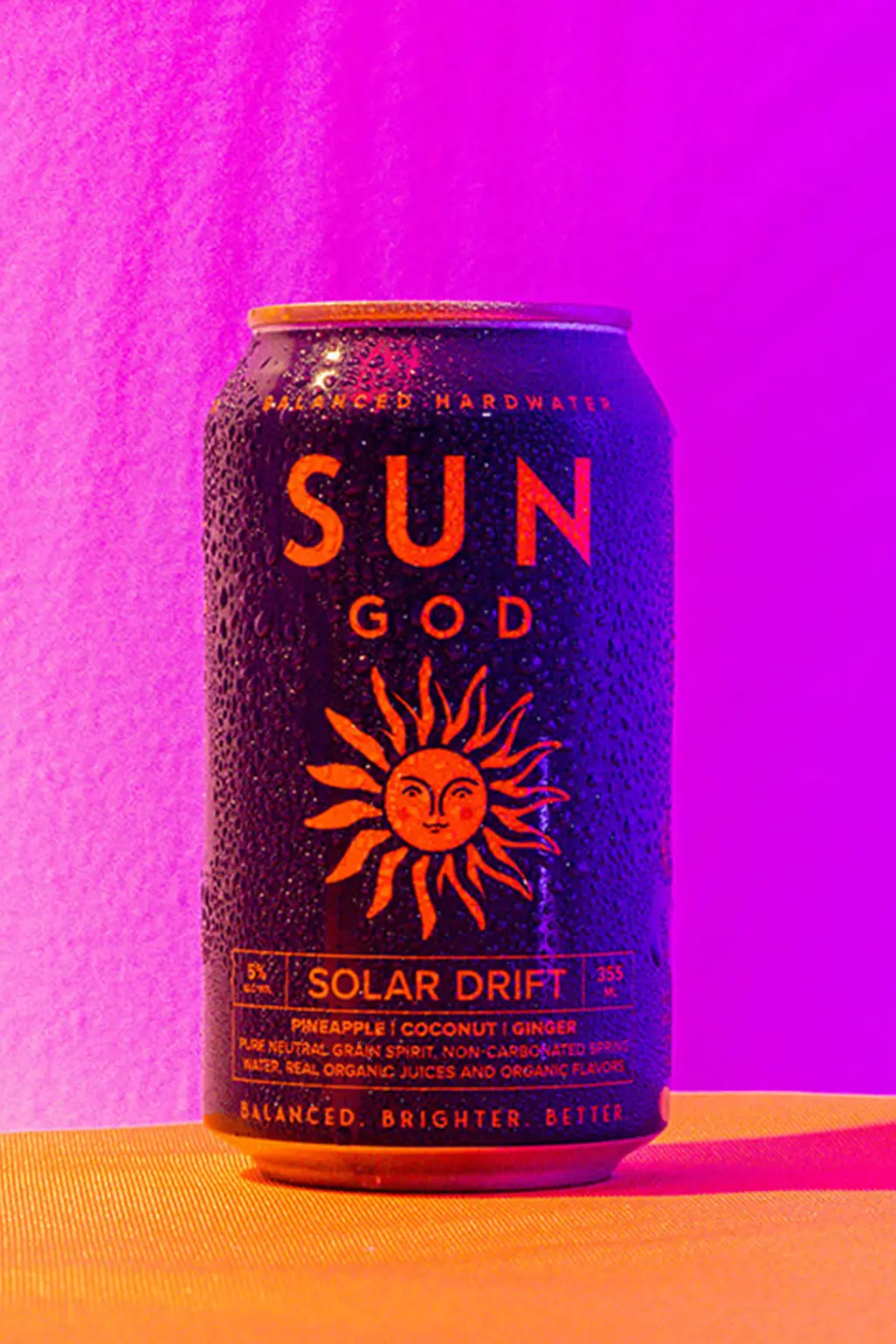
Flavor 2: Solar Drift
State: Calm, warm ease
Profile: pineapple, coconut, ginger
Vibe: tropical reset, relaxed confidence
User response: “This tastes like vacation in a clean way.”
Why it works:
Fresh pineapple aroma anchors the opening
Coconut gives roundness without sludge
Ginger keeps it light, modern, and health benefits
A sessionable piña-colada-adjacent profile
These two flavors cover two opposite ends of the emotional spectrum:
elevate ↔ unwind.
Future flavors will follow this model: each one assigned to a meaningful state change, not a commodity taste.
14. Not a Hangover Cure—A Better System
A key clarification:
We are not promising health outcomes.
We are building a beverage whose architecture reduces known stressors.
We do not add electrolytes or supplements due to regulatory constraints.
But we design around hydration, purity, and simplicity.
The mission is straightforward:
Make alcohol that respects tomorrow.
15. Origin: Engineering Meets Real Life
The founding insight came after:
10 days of drinking on a boat in Croatia, looking for something new
Frustration with every available option
Noticing how quickly fatigue accumulates
Realizing no major brand was solving the real problem
An ex-Tesla engineer obsessed with first principles and a flavor-driven product lead rebuilt alcohol from the ground up:
Remove the unnecessary.
Optimize the essential.
Deliver an experience worth remembering.
Sophistication through Simplicity.
The first homemade prototypes were created in one night. They were good enough that everyone kept drinking them. That set the bar for everything that followed.
16. Our Value Proposition: Purity, Transparency, Accountability
We do not make health claims. The category doesn’t allow them, and we don’t believe in stretching the truth.
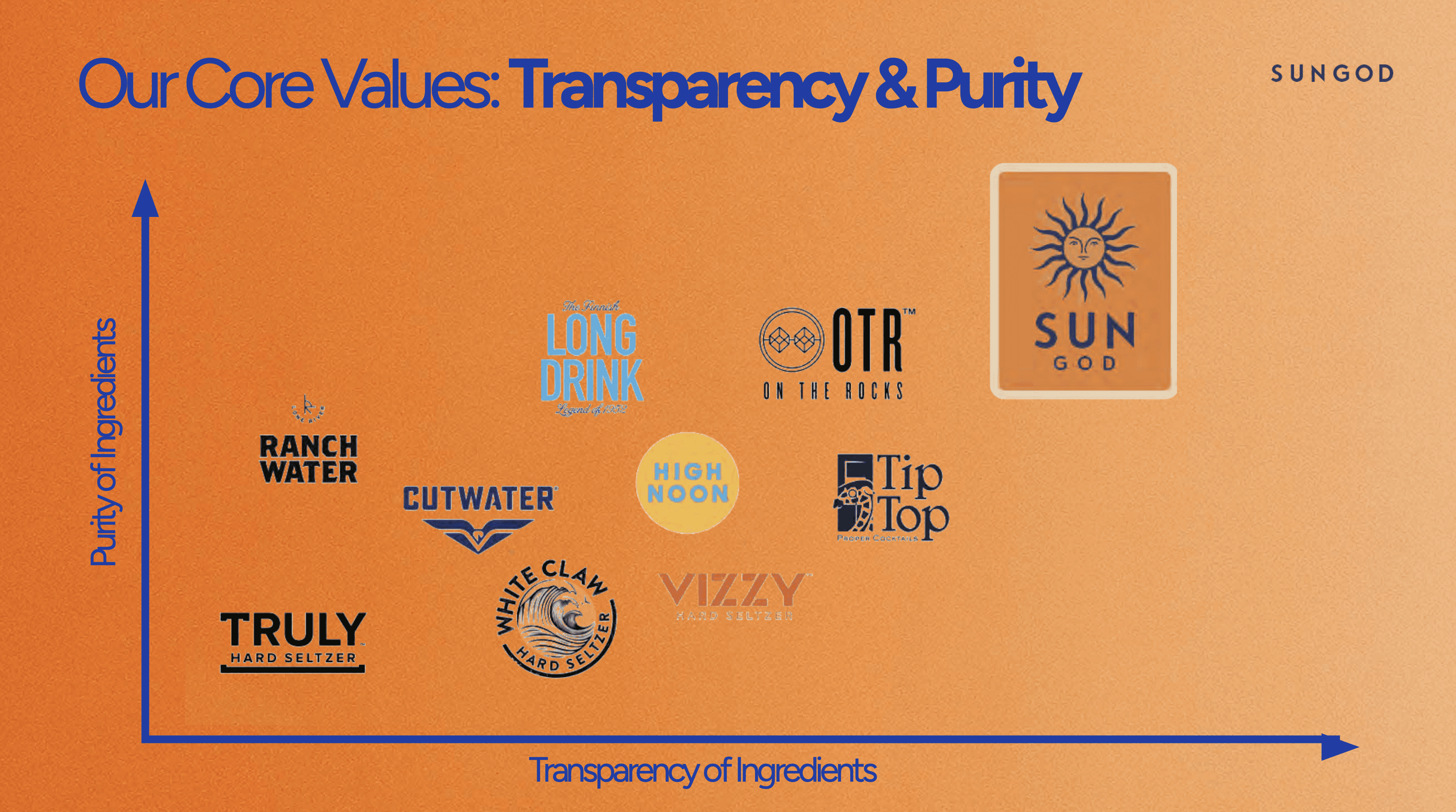
Instead, our value proposition is built on two measurable pillars:
Purity of ingredients.
We use a high-purity alcohol base, organic real juices, premium water, and a fully organic formulation. Every choice is intentional and auditable.
Transparency of formulation.
Most alcohol brands are not required to list ingredients. We do it anyway.
We list our ingredients on the can to:
earn trust
hold ourselves accountable
give customers real information, not marketing language
Our internal product metrics focus on:
congener minimization
ingredient traceability
flavor clarity and sessionability
hydration-to-alcohol balance
This is how we differentiate—by being honest about what’s inside and disciplined about why it’s there.
17. Conclusion: Clear Thinking About Drinking
SUNGOD is not an incremental improvement.
It is a redesign of the alcoholic beverage from the molecular level out.
Cleaner input
Smarter architecture
More intentional experience
Less downstream cost
This is alcohol built for people who want to live, move, think, and perform—without the sacrifice.
Hardwater is the next category.
SUNGOD is the first expression.
Stay Close to the Source
Join the SunGod list for insider news, secret drops, early access, and frequent merch giveaways—no bubbles, no spam.